Reflections in glass and objects
The obsession with reflections continues. It can be a fascinating study about the path of light: uneven, irregular, semitransparent surfaces, layers of glass all produce a distorted view of reality, and they all have some truth to it. I am stating a lot of obvious things in here.
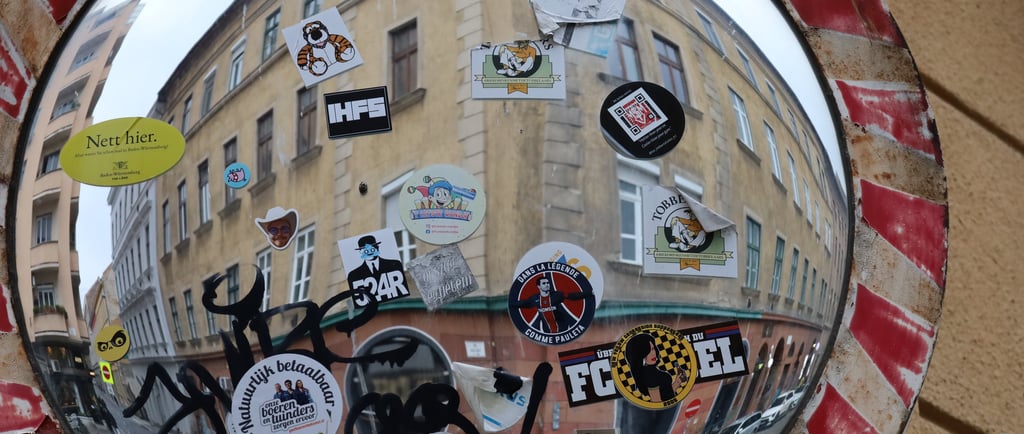
Reflections are so fascinating because they are rarely faithful to the object they show. Not in the literal sense: it's not like we look into a bathroom mirror and want to see details just as everyone else will out in town.
Some surfaces are uneven. Others are curved, like the one in the photo above (that's deliberate, by the way, this is a traffic mirror). Again others are semitransparent. And there are layers of glass, and the object gets distorted, interrupted, multiplied, turned upside down, and the list goes on.
The fascinating part is that we are looking at a bunch of rays of light, or a stream of photons. Each photon gets diverted by the surface, and reach our eyes on this new trajectory. This is seemingly unpredictable, but through physics and math, you can calculate the path of every photon. Mathematics will help you construct the distorted image if you know the exact topology (geometry) of the reflecting surface, the original object, the viewing angle and the lighting.
All of this is fiendishly complex but entirely deterministic. It can be calculated through pure mathematics, and there has been software to do this for decades – no AI required. This is one of the truths to these reflections.
The other truth is that it's too easy to get a distorted picture of what we believe is real. We experience the world through our senses. Our eyes are directly connected to our central nervous system, which does a lot of processing and transformations before we take note of the image we see. Photography works on this: it aspires to create two-dimensional depictions of the object that will remind the central nervous system of the actual object. When this depiction is altered, that is the moment some people will find fascinating.
And with that, I will stop stating the obvious.
About the galleries: All the photos have been taken by me, using a Canon EOS D or EOS RP camera. None of the photos were edited or modified, except for the occasional straightening when my clumsy hands made the image slanted.
Scroll down to read the description of each photo.
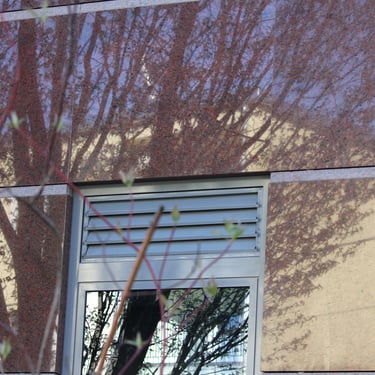
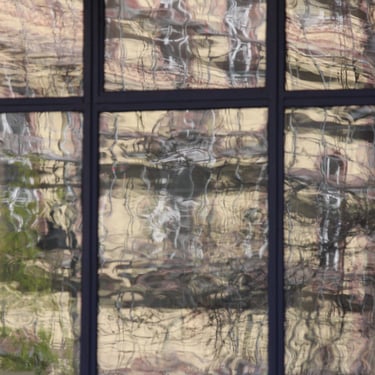
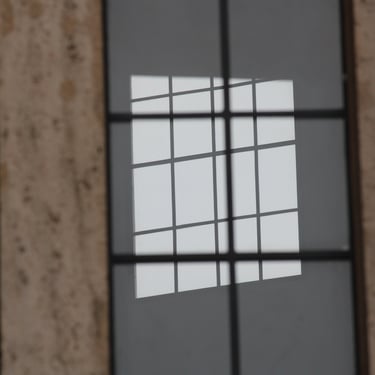
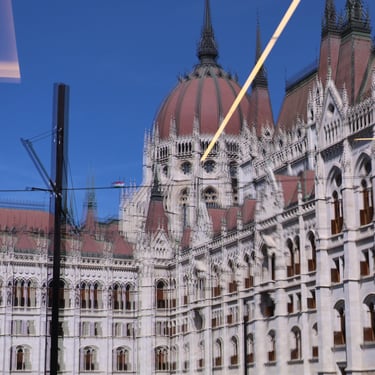
Description of photos, from left to right and top to bottom:
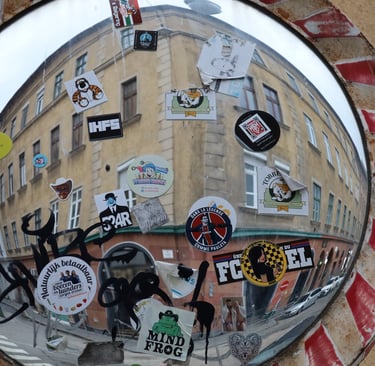
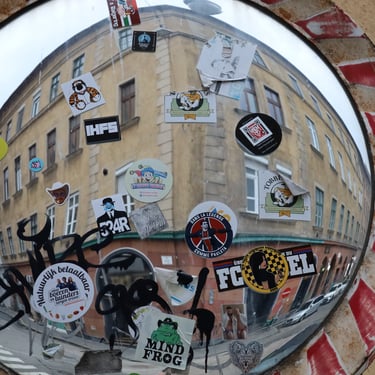
A traffic mirror full of stickers at the corner of Klauzál tér and Dob utca, Budapest, Hungary
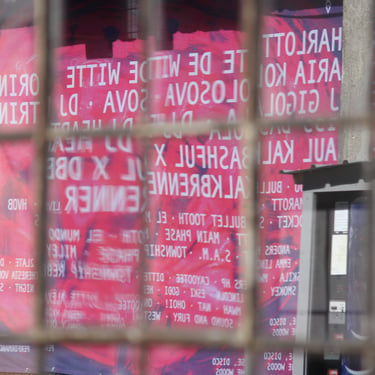
The mosaic: the sectioned window breaks up the image -- a music festival poster in the Reffen, Copenhagen, Denmark
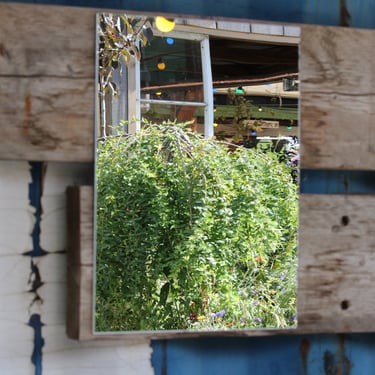
The false window: an actual bathroom window showing the opposite side of the lane in the Reffen, Copenhagen, Denmark
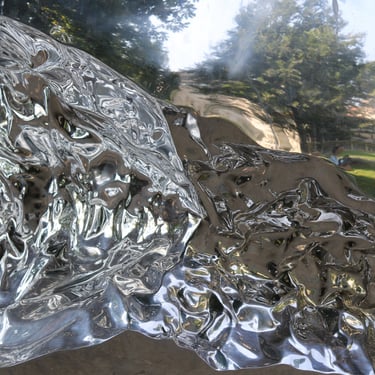
From a rounded surface to complete distortion: a reflecting sculpture in Lugano, Switzerland
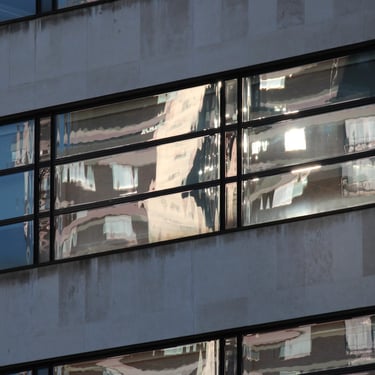
Non-contiguous and distorted: irregular office windows in Montreal, Canada.
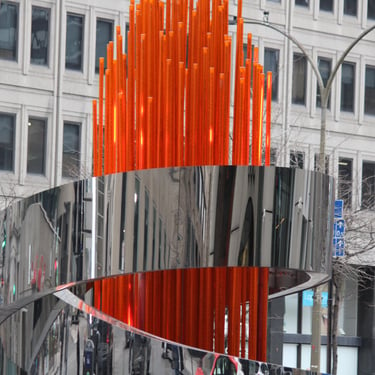
Another reflecting sculpture with an interesting image of the street in Montreal, Canada.
The non-contiguous: residential building reflected in polished stone in Budapest, Hungary.
Looks like water: the street is reflected in an irregular window surface in Budapest, Hungary.
Windows is loading: window reflected in another window in the Gázgyár (Gas works) area, Budapest, Hungary.
Double vision: The Parliament reflected in a double-glazed semi-transparent shop window in Budapest, Hungary.
Skewed and stretched: residential building reflected in a car's hood in Budapest, Hungary.
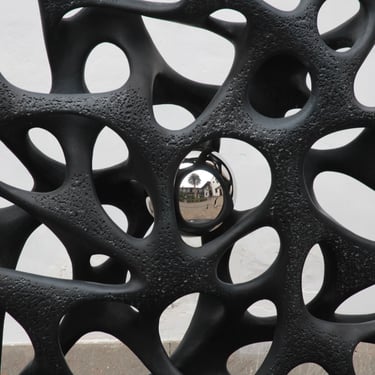
A tiny reflection: the reflecting sphere is part of a sculpture in Las Palmas de Gran Canaria, Spain
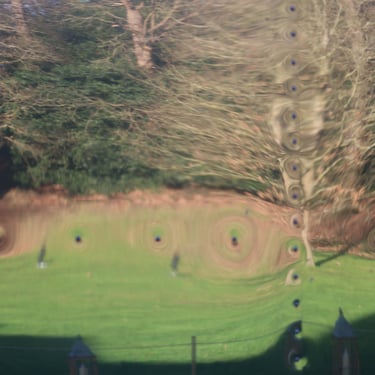
Anything this was, it became a peacock: a park is reflected in a food truck in London, England